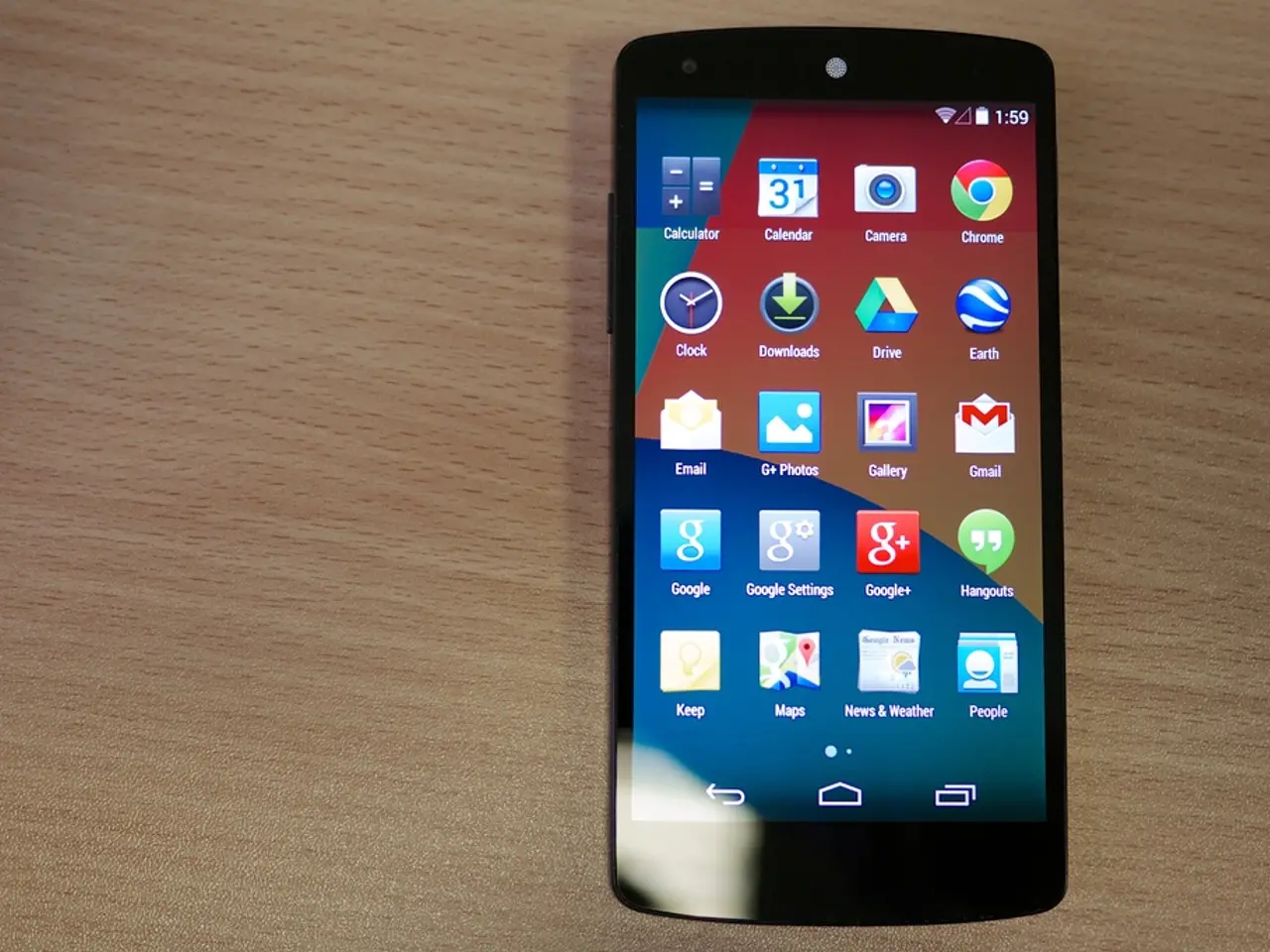
Top-Notch Mobile Applications for Daily English Exercises
In the ever-evolving world of education, mobile apps are revolutionising the way people learn English as a second language. These innovative tools offer flexibility, interactivity, and personalised learning experiences, making language learning more accessible and enjoyable for millions worldwide.
One such app is Duolingo, which provides gamified learning, progressive modules, and interactive lessons covering reading, writing, and speaking. Although it's free, Duolingo Plus is available for $6.99/month, offering additional features for those seeking a more immersive learning experience. Duolingo is popular among beginners and advanced learners alike, thanks to its fun and engaging approach to language learning.
Memrise, another effective app, focuses on authentic language experiences and immersion. It uses visual and auditory cues to help learners memorise vocabulary, making it ideal for contextualised learning. Memrise Pro, available for $8.99/month or $59.99/year, offers additional features for those seeking an enhanced learning experience.
For Indian learners, Hello English is a tailor-made solution, offering support in 22 local languages and a focus on grammar, vocabulary, and speaking. The app is free, with various features available.
BBC Learning English caters to intermediate to advanced learners, offering professional content with clear pronunciation, news-based learning, and a focus on English as it's used in real-life scenarios. This app is completely free, making it an accessible choice for learners seeking polished content and a focus on pronunciation.
FluentU, Cake, and Talkpal are other popular apps that offer bite-sized video lessons, AI pronunciation feedback, daily speaking practice, and live conversation practice with native speakers, respectively. These apps are designed to help learners improve their conversational skills and practical English usage.
In comparison to traditional classroom learning, mobile apps offer flexibility, personalization, cost-effectiveness, and engagement. While they may lack the depth and comprehensive feedback that a classroom setting offers, many learners find a combination of both methods to be the most effective approach.
For instance, ELSA Speak uses artificial intelligence to provide instant feedback on pronunciation accuracy and fluency, guiding users through exercises to master sounds, words, and full sentences. Rosetta Stone integrates images, text, and sound to teach English contextually without relying heavily on translations. Pimsleur emphasises listening and speaking with its audio-based approach, mimicking natural language acquisition.
Anki is a flashcard app that employs spaced repetition to help learners memorise vocabulary and concepts effectively. Memrise incorporates real-life video clips of native speakers to aid learners in grasping nuances and cultural aspects of the language.
Lingoda is a preferred choice for professionals aiming for workplace proficiency in English due to its focus on practical language skills directly applicable to everyday work scenarios. Tandem connects learners worldwide, allowing them to practice speaking English with other learners or fluent speakers via voice and video chat.
In conclusion, mobile apps are transforming the landscape of language learning, offering a flexible, engaging, and cost-effective alternative to traditional classroom learning. Whether you're a beginner or an advanced learner, there's an app out there that can help you master English and communicate effectively in today's globalised world.
- Technology has significantly impacted the education-and-self-development sector, with mobile apps like Duolingo, Memrise, Hello English, BBC Learning English, and others revolutionising the way people learn English as a second language, offering flexibility, interactivity, and personalised learning experiences.
- Lifestyle today incorporates various technological tools for education and self-development, such as Duolingo, which offers gamified learning, or Memrise, which focuses on authentic language experiences, making language learning more enjoyable, accessible, and immersive for millions worldwide.